Four emerging agricultural researchers will take their university studies beyond the campus and into Western Australian farming communities as part of the South-West WA Drought Resilience Adoption and Innovation Hub (SW WA Hub)’s bursary program.
The PhD students will gain firsthand experience of the challenges growers face as they work to make agriculture more resilient to a drying, warming and increasingly more variable climate.
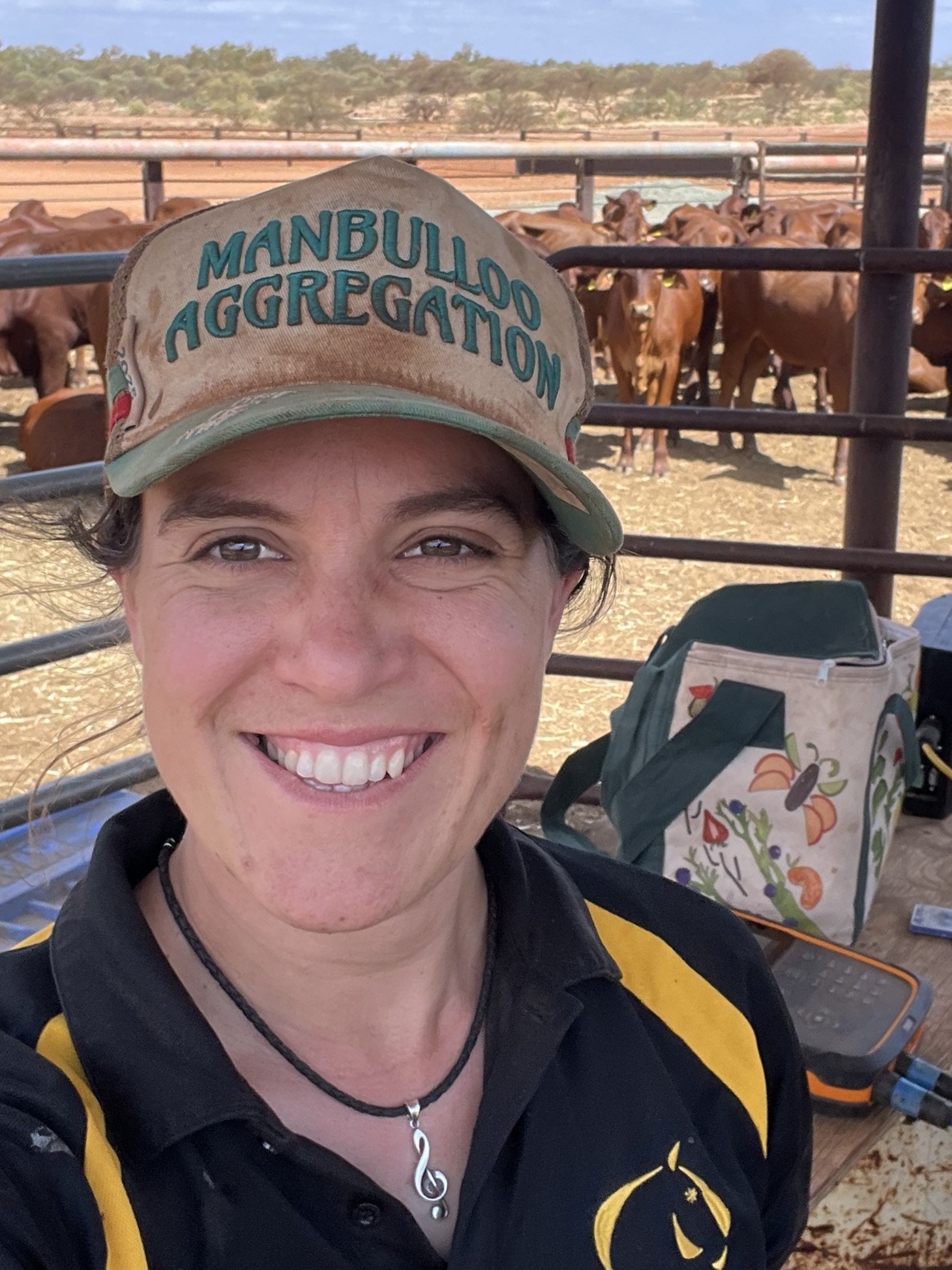
Whitney Payne, The University of Western Australia (UWA), will work with Wyloo Station to research strategies to improve reproductive outcomes of livestock undergoing heat stress in Western Australia’s rangelands. Learn more.
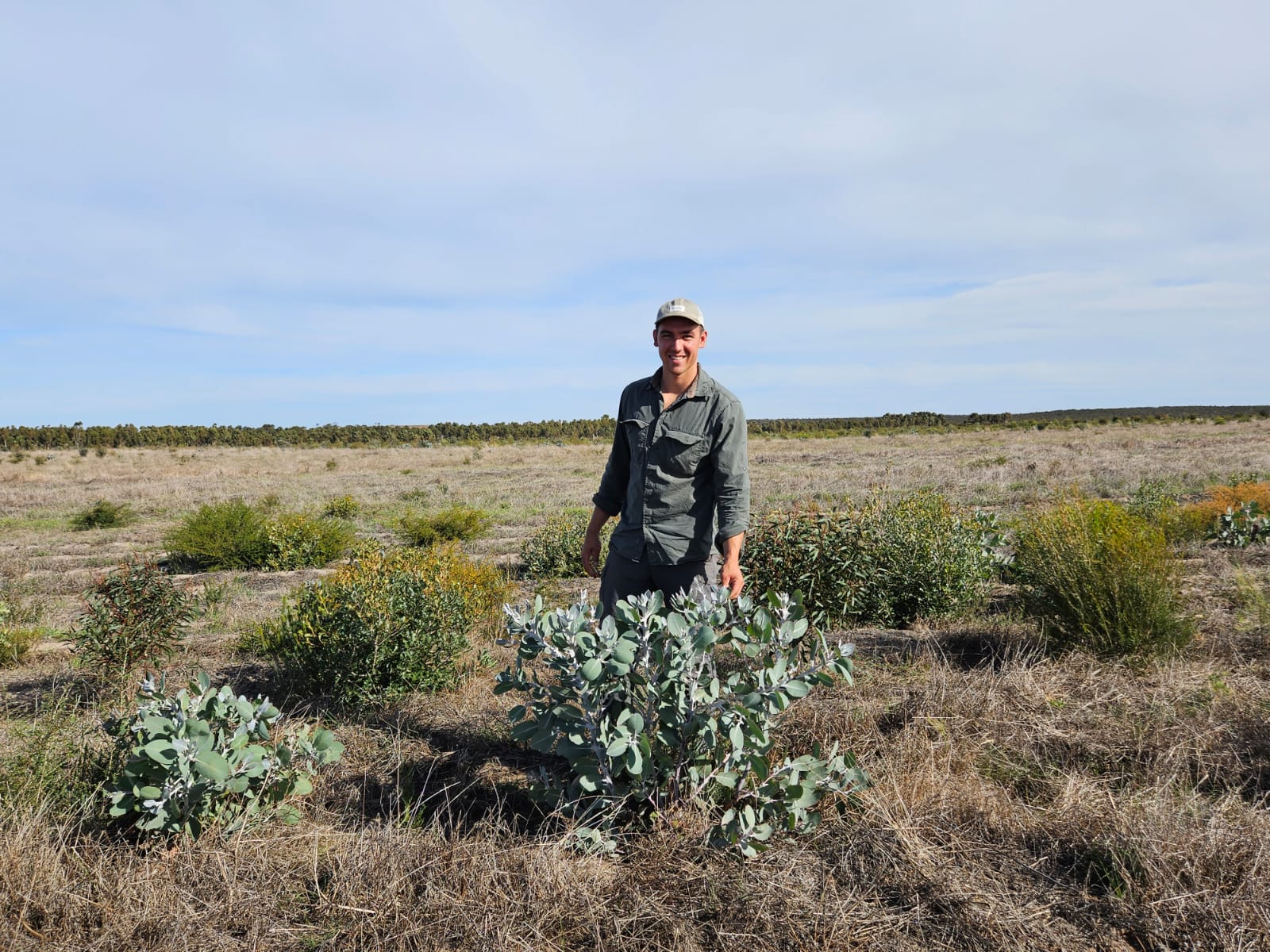
Oscar Jones, ARC Training Centre for Healing Country at Curtin University, is evaluating whether broadacre seeding machinery could be used as an alternative direct-seeding method for native seed mixes for on-farm revegetation in the Wheatbelt. Learn more.
Montana Walsh Baddeley, UWA, is working to understand how genetics and grazing behaviour influence body composition in WA rangelands beef cattle, especially during times of drought. Learn more.
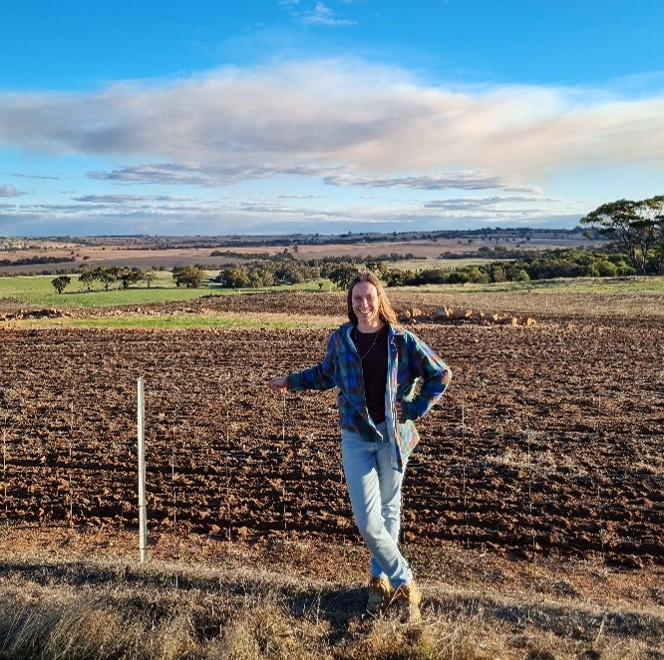
Georgia Welsh, Murdoch University, is investigating how forage shrubs and cereal crops can be used as both shelter and feed during lambing to improve lamb survival, animal welfare and whole-farm resilience in mixed farming systems.
The SW WA Hub bursary program supports PhD students to integrate and extend their research in real world scenarios.
Bursary recipients can use the funds to work with Western Australian grower groups and industry, develop participatory research, produce extension resources, and attend or present at workshops, field days, or conferences.
Acting SW WA Hub Director Tanya Kilminster says that for drought and climate resilience research to make a real difference on farms, it needs to be grounded in the day‑to‑day realities of producers and regional communities.
“These students are working on really exciting projects, particularly around drought resilience, and we want to bring that research and knowledge to life,” Ms Kilminster said.
“Getting researchers and growers talking early means researchers can test their ideas against what’s actually happening on the ground. Those conversations can help shape the research and make sure the solutions they develop are practical and address the problems producers are facing.
“Those early connections can also become valuable relationships over the course of a researcher’s career. When you build trust with growers early on, they can become people you come back to over time to test ideas, share experiences and help shape where your research goes next.”
Ms Welsh’s PhD research has demonstrated how edible shelter, in the form of crops and shrubs, can support lamb survival by providing feed and shelter from adverse weather. Her supervisor, Dr Serina Hancock, says the bursary will help ensure the research is communicated to the wider industry to assist producers to make informed decisions on-farm.
“By working directly with producers and industry, Georgia can translate four years of research into practical information that accounts for different farming systems, environments, and seasonal conditions”, Dr Hancock said.
Dr Kelsey Pool, from the UWA School of Agriculture and Environment, who supervises Ms Payne’s PhD, says the bursary funding will ensure Ms Payne is able to contextualise the commercial relevance of her research in reproductive biology.
“We can’t scientifically address commercial problems without commercial partners. Working directly with industry will allow Whitney to target her investigation into animal physiology to best address relevant problems in Northern pastoral systems,” Dr Pool said.
“It also enables her to engage with various stakeholders in the pastoral industry, which contributes to the ongoing industry codesign of the study.”
Mr Jones says the bursary funding will enable him to connect with the agricultural sector in a way that would not have been possible without this funding.
“Not only will the bursary support us financially to develop the extension resources we intend to develop, but we will also be better connected and informed by the sector through the connection within the Grower Group Alliance and the SW WA Hub”, Mr Jones said.
Led by the Grower Group Alliance and funded by the Australian Government’s Future Drought Fund, the SW WA Hub is committed to fostering agricultural innovation and collaboration. By supporting young researchers to link their research with grower groups and industry, the Hub helps the next generation of WA agricultural researchers gain firsthand insight into farming systems, local challenges, and industry priorities.
The four bursary recipients’ projects are supported by other sources of funding, including from the WA Agricultural Research Collaboration, Meat and Livestock Australia, Gascoyne Pilbara Rangelands Initiative, Australian Research Council Training Centre for Healing Country, Lotterywest, and other project partners.
To learn more about the Hub bursary program, visit gga.org.au.