
Farmers across Western Australia’s South West are eager to revegetate parts of their properties, but costs and limited access to equipment or technical expertise can make this challenging. One way to reduce these barriers could be to support farmers to use their existing seeding equipment to sow native seed mixes on-farm. However, this isn’t as easy as it sounds. Native seeds come in a range of sizes and shapes, and like agricultural varieties, have quite specific delivery requirements in order for them to germinate and establish.
To tackle and overcome some of these challenges, Oscar Jones, a PhD student from the ARC Centre for Healing Country at Curtin University, is working with farming and cropping stakeholders to develop a protocol that farmers can use to sow native mixes, based on several years of on-ground field trials taking place in the Great Southern.
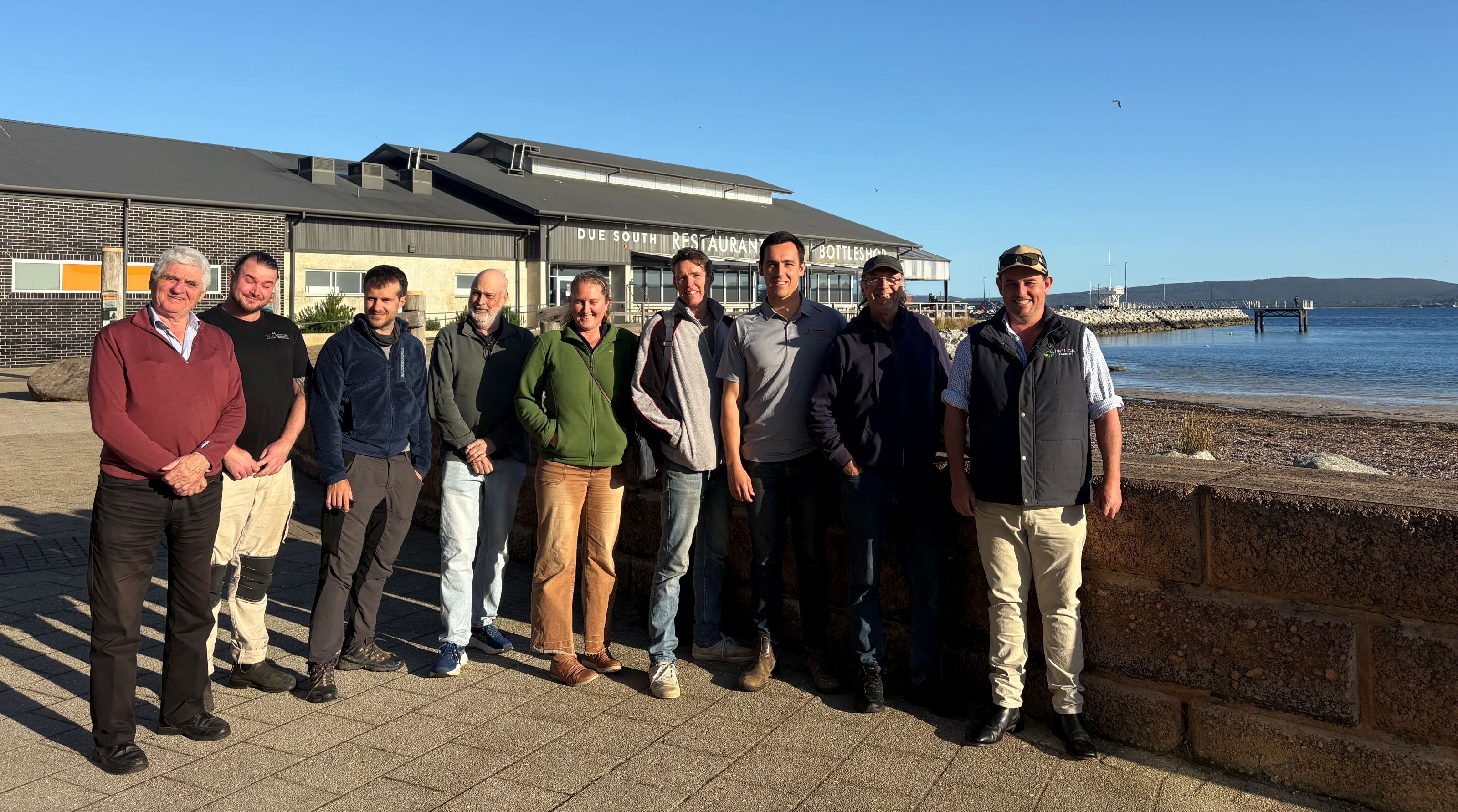
Supported by a student bursary from the Grower Group Alliance’s (GGA) South-West Drought Resilience, Adoption and Innovation Hub, funded through the Australian Government’s Future Drought Fund, Oscar held a workshop in Albany in late September, bringing together project partners from Bush Heritage Australia, Greening Australia, Wilga Farming Australia, Nowanup and Gondwana Link to go over the major considerations farmers should consider when using their seeding equipment to sow native mixes. This included factors such as:
- Site considerations and preparation: Why would a landholder want to use this equipment in the first place? Is a site going to be appropriate for an air seeder? What type of site management would be required before we can seed? How do you know what species you should sow to achieve good environmental outcomes while also limiting seeding challenges?
- Preparing seed batches and seeding machinery: Who can coat seed mixes for you? What must you consider when calibrating your machine? How do you make sure seed is flowing through your delivery tubes adequately?
- Seed delivery and follow-up management: What depth should you sow at? How should you set up your points or discs? What speed should you be sowing at? How do you monitor outcomes and manage threats such as weeds after sowing?
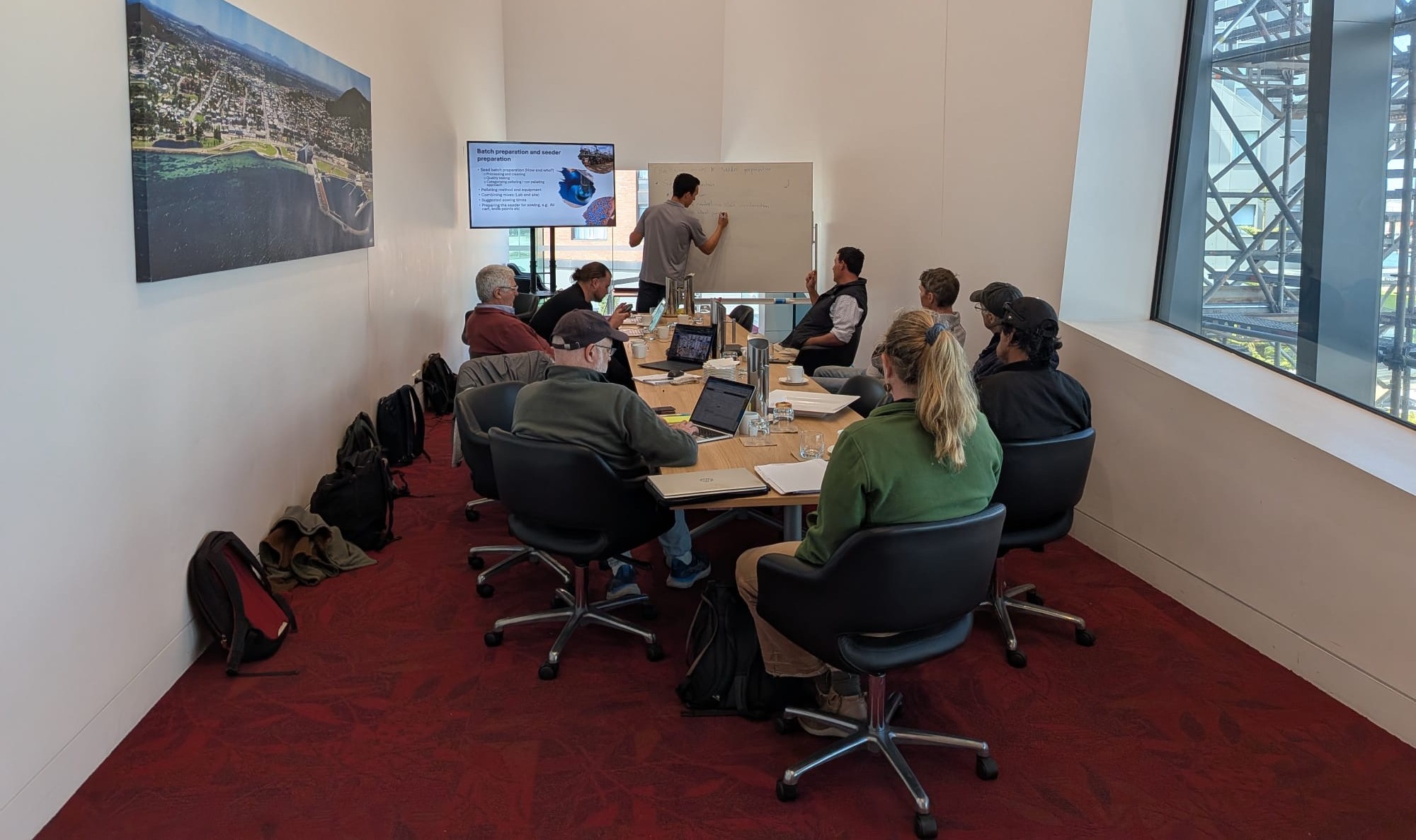
The project team will use these considerations to develop a landholder guide for the South West farming community that will be available early next year. As they develop this guide, they will work with the GGA grower group network to ensure it is as translatable as possible, so watch this space!