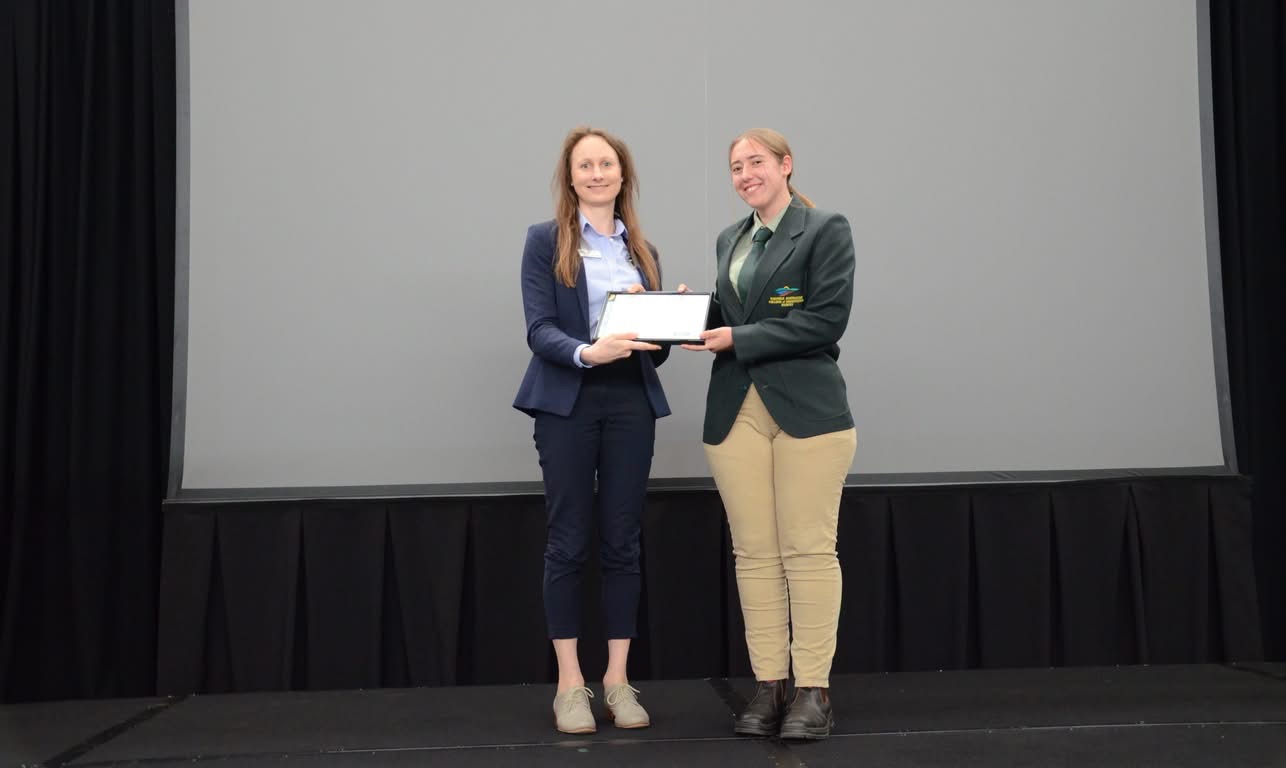
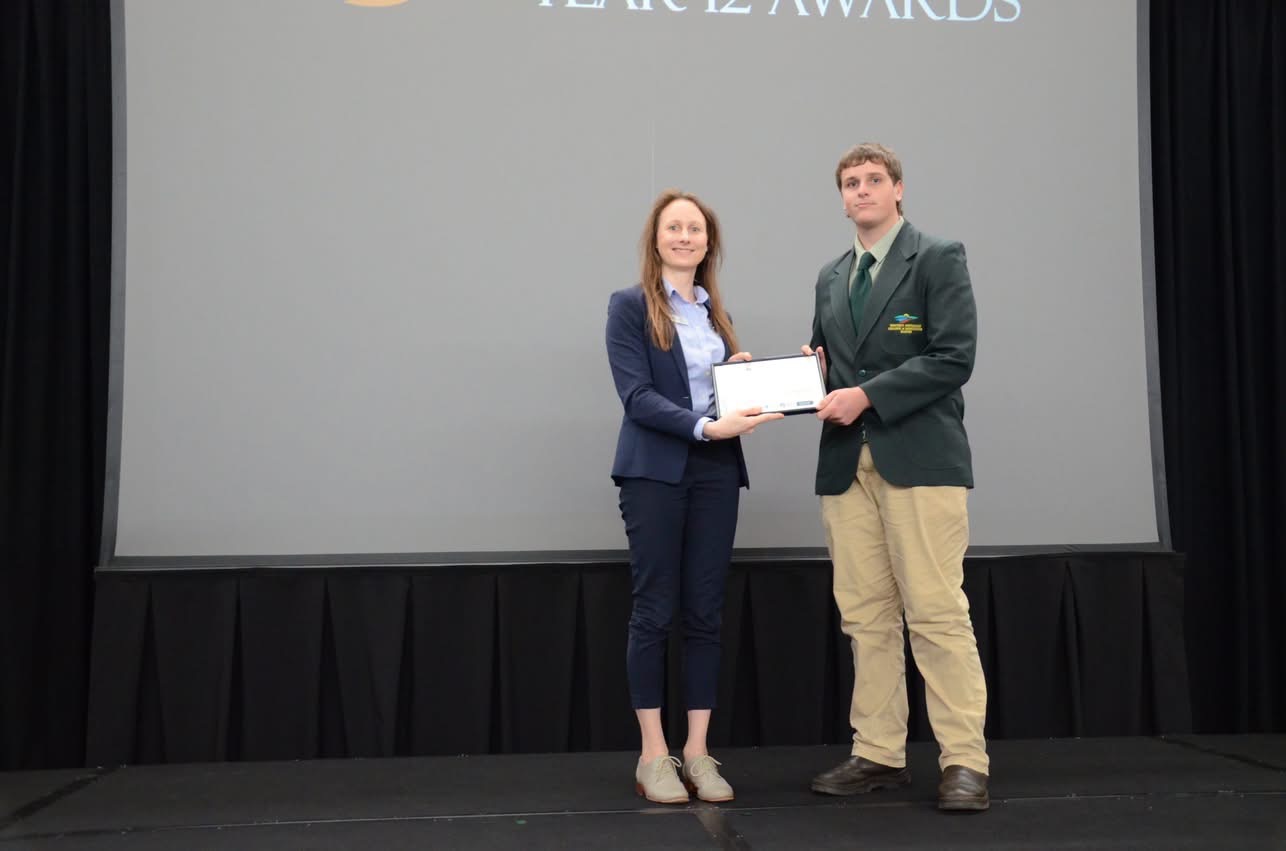
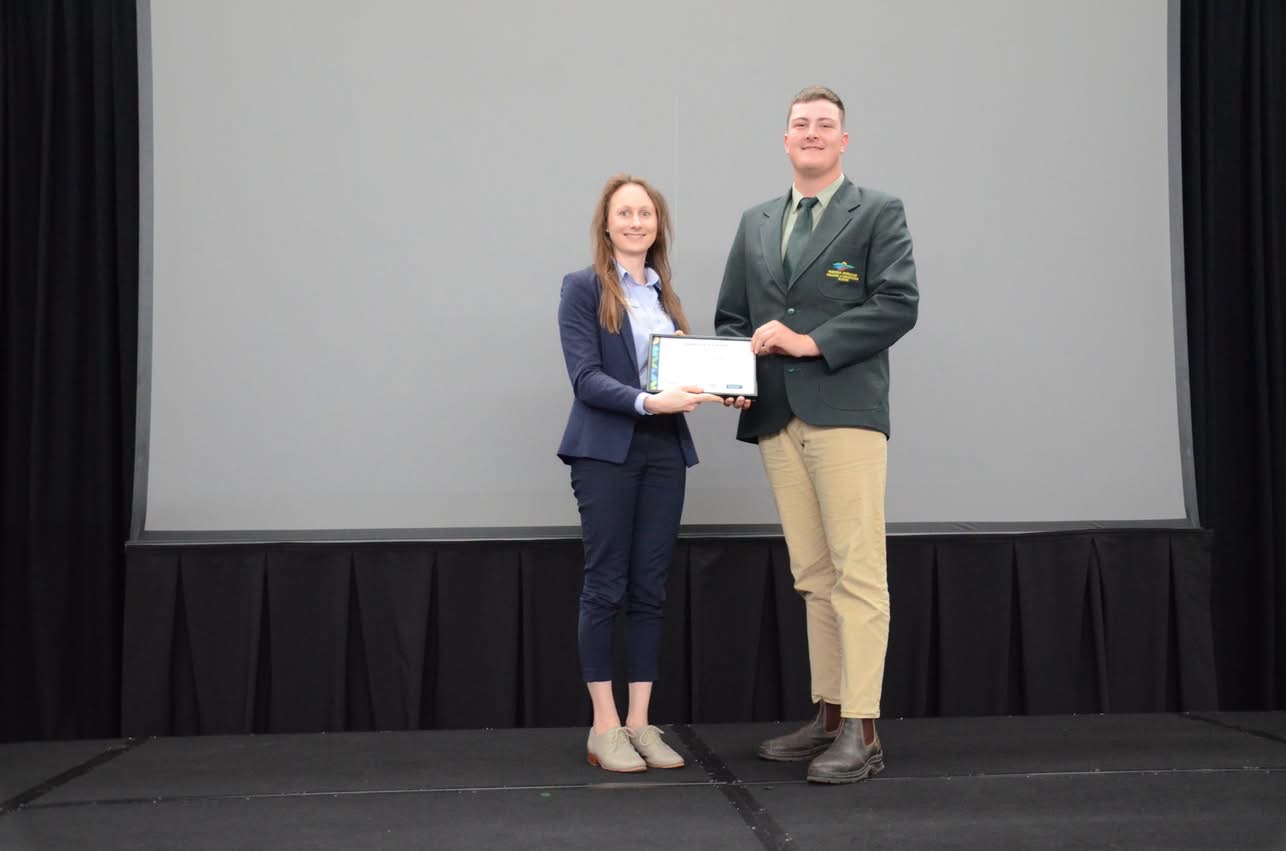
Three Year 12 students from WA College of Agriculture – Harvey (WACOA Harvey) were recognised at their graduation ceremony for developing innovative solutions to climate-related challenges facing local producers.
Their projects were created as part of the Climate-Smart Innovation Challenge, facilitated by the Grower Group Alliance’s South-West WA Drought Resilience Adoption and Innovation Hub (SW WA Hub).
The Challenge invites high school students to develop practical solutions for farming in a hotter, drier and more variable climate, focusing on issues affecting producers in their own region. This year, 32 students from WACOA Harvey participated.
First place was awarded to Paige Picton for her concept of an edible silage wrap made from algae rather than plastic. The idea could reduce plastic waste, improve livestock nutrition and help lower methane emissions.
“What I wanted to do was help farmers with their feed efficiency and nutritional value problems, as well as the plastic pollution throughout the soil and the limited yield they’ll get from that plastic pollution,” Miss Picton said.
“Overall, it’s about mitigating a lot of effects from [using plastic wraps], trying to make it more sustainable and more productive with a simple change.”
Second place went to Oscar Tozer, who investigated using specialised enzymes to improve compost quality and increase its value as an alternative to conventional fertilisers.
Oscar was interested in exploring this topic because of the current worldwide conflicts that are impacting farmers.
“It’s a big issue you hear about every day. Nitrogen, fertilisers, urea and everything is being really diminished in quantities and availability to farmers. Farmers need to look at more organic nitrogen options,” Mr Tozer said.
Third place was awarded to Ben Dusenberg, whose concept uses drones and livestock movement to establish pasture crops, reducing reliance on heavy machinery while lowering soil compaction, costs and emissions.
“When I was home in Ireland, I helped a local dairy owner manage his dairy farm and he originally gave me the idea,” Mr Dusenberg said.
“There are trials being put in Europe right now that are using that idea of spreading the seed over the pasture and you use the livestock as a tool instead of tractors, which are very heavy with diesel emissions and greenhouse emissions.”
The Challenge has been integrated into the curriculum at WACOA Harvey.
Manager Farm Training Paul Dyson says students can get dismissed because of the view that they have limited real world experience.
“The reality is they are not preprogrammed in any way, so they are open to ideas, and their mind is a blank canvas,” Mr Dyson said.
“The Challenge allows them to develop their own thinking and response to issues they find when researching weather trends in our area over a long period of time.
“I am most impressed by the out-of-the-box ideas that our students have had. Some may need further development, but many have genuine potential for practical application.”
Acting Hub Director Tanya Kilminster said the quality of student work continued to improve each year.
“Since working with WACOA Harvey over the past four years, we’ve seen remarkable growth in research, critical thinking and innovation,” Ms Kilminster said.
“Each year, students continue to raise the bar, developing ideas that have genuine potential to be explored further and, in some cases, translated into real-world agricultural applications.”
The SW WA Hub, funded through the Australian Government’s Future Drought Fund, is helping producers and regional communities prepare for the challenges of a warming, drying and more variable climate.
By encouraging young people to think creatively, test ideas and solve real-world problems, the Climate-Smart Innovation Challenge helps build the skills needed for a resilient agricultural future.